
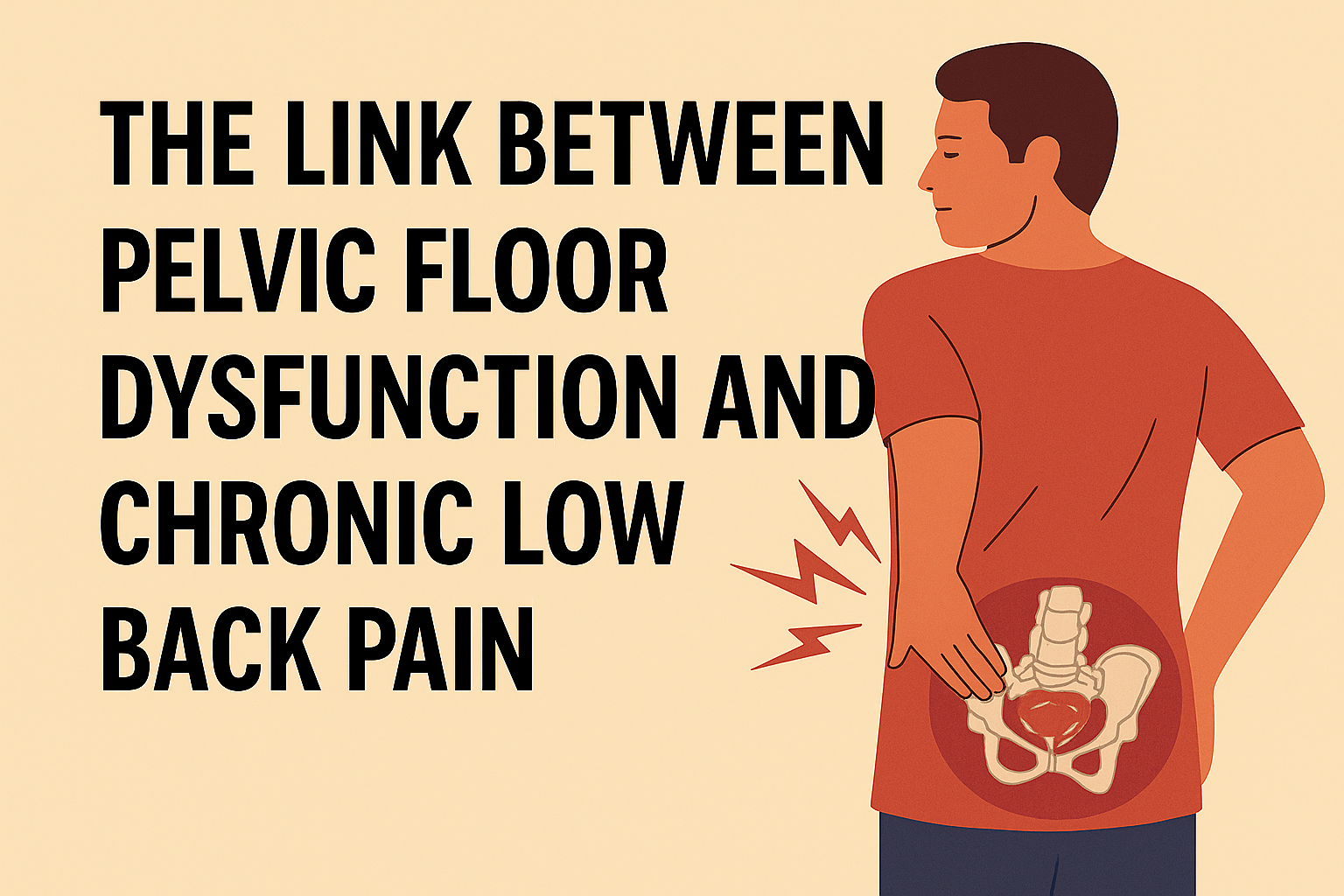
The Link Between Pelvic Floor Dysfunction and Chronic Low Back Pain
Do you suffer from chronic low back pain that just won’t go away—despite stretching, strengthening, or seeing multiple specialists? What if we told you the missing piece might be in your pelvic floor?
Many people think of the pelvic floor as being only relevant to bladder or sexual health, but its role in spinal and core stability is often overlooked. The pelvic floor is part of your deep core system, and when it isn’t working well, it can create ripple effects throughout your body—especially in the low back.
What Is the Pelvic Floor?
Your pelvic floor is a group of muscles, fascia, and ligaments that form a supportive sling at the base of your pelvis. These muscles help control urination, bowel movements, sexual function, and provide support for the organs above. But they also play a key role in stabilizing the spine and pelvis.
When functioning properly, the pelvic floor works in harmony with the diaphragm, deep abdominal muscles (like the transversus abdominis), and spinal stabilizers (like the multifidus). This group is often called the “core canister”—and when one part is off, the others have to compensate.
How Pelvic Floor Dysfunction Affects the Low Back
Pelvic floor dysfunction (PFD) can mean weakness, overactivity, tension, incoordination, or poor connection to these muscles. This dysfunction can cause:
- Altered core stabilization, increasing strain on the lumbar spine
- Imbalanced pressure within the abdominal cavity
- Restricted mobility of the sacrum and tailbone
- Pain patterns that mimic sciatica or lumbar disc issues
- Difficulty recruiting key stabilizing muscles
In short: when your pelvic floor isn’t working well, your back is likely doing more than its fair share—and it can hurt.
Common Signs the Pelvic Floor May Be Involved
- Ongoing low back pain, especially with standing or lifting
- Tailbone or sacral pain
- Leaking urine or increased urgency
- Constipation or difficulty emptying
- Pain with sex
- Feeling of heaviness or pressure in the pelvis
- Hip or groin pain that’s unresponsive to other treatments
If you’re experiencing any of these symptoms alongside your low back pain, pelvic floor physical therapy might be your missing link.
How Pelvic Floor Physical Therapy Can Help
A pelvic floor PT doesn’t just treat the pelvis—we look at the entire body through a lens of connection. We evaluate how your breathing, posture, muscle coordination, and movement patterns might be contributing to your pain.
At Seattle Pelvic Therapy, I:
- Use gentle internal and external techniques to release tension and improve mobility
- Reconnect you with your pelvic floor and deep core muscles
- Provide education to help you understand your body
- Build sustainable strength and movement strategies
- Empower you with tools to manage and prevent future flare-ups
The goal isn’t just relief—it’s long-term resilience and function.
You Don’t Have to “Live With It”
So many people are told their back pain is “just part of aging” or that it has no clear cause. But your body is talking to you. And sometimes, it’s trying to point you toward a deeper root cause.
Pelvic floor therapy might be the key you didn’t know you were missing.
Ready to explore your hidden strength?
Book a free discovery call and let’s uncover the root cause together.